Monday, December 6, 2010

Forgiveness and Resurrection - The Apostles' Creed Part 5


“The forgiveness of sins, the resurrection of the body...”

The essence of the gospel is the work of Jesus Christ. Christ has secured forgiveness through his death and resurrection. Our promise includes sharing in the richness of this state of forgiveness and resurrection. Forgiveness has the power to break the chains of bondage that weigh down the human soul. Only God himself can forgive sins as he is the one who is eternally offended by man’s transgression. Only he can remove the separation between man and himself. Man needs forgiveness. We do not need more knowledge or more enlightenment. Ignorance is not our problem, rather, sin remains the essence of man’s predicament.

Today man continues to deceive himself in thinking that no forgiveness is needed for his present state. Man is not essentially good. On the contrary, he is essentially bad. This does not mean that man is a bad creation nor does it mean that the physicality of mankind is evil, instead it is our thoughts and wills that carry the mark of dissipation. Scripture indeed testifies to the sinful state of mankind. While freely choosing to do many good things, man is incapable of amending his ultimate wound, that is, separation from God. Only God himself can and has done this in the body of his Son, Jesus Christ. 

Christians believe in forgiveness for we have been forgiven. Forgiveness is a state of  reality for a believer in Christ; we have entered into the realm of being forgiven. We are constantly being made new by the work of the Holy Spirit which will culminate in the bodily resurrection of believers to reign one day alongside our God and Lord for God’s dwelling place is with mankind. The Christian hope lies not in soul-body dismemberment but rather in the full realization of our bodies into a glorified state. Christ’s resurrection inaugurated this event. 

The forgiveness of sins and the resurrection of the body are two realities for the life of the believer. We don’t have forgiveness without the resurrection. Our hope is built on this; that our sins are forgiven and that we will at one point in the future be resurrected unto new life. Imagine a complete, whole, and idealized life where there is no crying and there is no pain. Envision a life with no disease or cancerous intrusions. As believers, our lives do and will mirror that of the Savior. For we have died and been buried through the work of Christ, we too will be share in the resurrection of Christ Jesus. This is the gospel in which we take confidence. Without the forgiveness of sins and resurrection, there is no gospel.

The Church, The Holy Spirit, and the Saints - The Apostles' Creed Part 4


“I believe in the Holy Ghost; the holy catholic church; the communion of saints...”

As Christians, we believe in one God. As we believe in God the Father, we also believe in the Son. As we believe in the Father and the Son, we also believe in the Spirit. Neither one is the same yet they are all God. This mystery has been believed by Christians since the beginning. Yes it is a mystery yet this is how God is shown forth in Scripture. We believe God is one, yet we believe he exists as Father, Son and Holy Ghost. This line completes the trinitarian view of our God. So what do we believe about God the Holy Ghost?

Scripture says he is our helper, guide, guarantee of salvation and is the sparkplug for our growth into holiness. The Spirit always points the way to Christ, he is not a team player. Without the Spirit in your life it is impossible for you to be a Christian; it is the guarantee of your faith and the way only way in which you can believe in Christ. Apart from the Spirit there is no faith in Jesus Christ for who he really is. It is also natural that this belief statement precedes the belief in the church. Without the Spirit there is no true church. The church, through the work of the Spirit, is how we grow in Christ-likeness.

The church is holy because Christ is holy. The church is holy because those who are in faith are made holy by the Spirit. The church is holy because it is set apart for a special work in this world. We are not holy apart from the work of the Holy Spirit forming us into the image of Christ. We are not holy apart from the reliance upon prayer and God’s word to grow us and conform us to his will. We church is holy because of who are Head is, which is Christ. We are catholic in the sense that we conform to the faith that has been believed by Christians for all of time and we share in fellowship with Christians no matter where they may be in the same fellowship. We celebrate our head through fellowship and communion. 

The Lord’s Supper we celebrate the presence of Christ among us in the body. This reality does not exist in any other institution in the world. The Lord’s Supper brings us together to proclaim the Gospel and continually and progressively grow us in the Spirit as we worship him together. We are saints because we now dwell by faith in the body of Christ and will one day dwell with him for eternity for his dwelling place is among men and we will be made new and glorious as he has been glorified. Saints are reborn by faith in Christ, shedding their old self and putting on the new self, which is Christ. We show this vividly through baptism. We become saints through faith in Christ as the Spirit changes our heart to love him and we show this faith through the act of baptism which we hold in high regard as it shows us who in fact is in communion and who is not.

So we believe in the Spirit’s work to make us holy; making us more like Christ. He convicts our heart, helps us, reminds us of scripture and holy acts. We experience this most vividly in the holy catholic church which is the keeper of the faith believed by all Christians throughout time and seeks to make Christ known in a world that is dying. We are a part of the catholic church in the sense that we affirm true Christian beliefs. As we confess we share in the communion of the saints who also affirm the faith and celebrate Christ through his Supper of bread and wine which is his body and blood poured out for us. We baptize those who by faith enter into this faith which shows the power of the Holy Ghost to change the heart of sinners and make them like Christ.

Thursday, November 18, 2010

ORC Basket Delivery

Hey students and parents! Be sure to join the Ridge at 8:45 on Saturday morning to hand out Thanksgiving baskets. Lets bless others and show the love of Jesus Christ this holiday season.
Published with Blogger-droid v1.6.5

Monday, November 8, 2010

It's All About Jesus - The Apostles' Creed Part 3

Why are creeds important? They orient us to the truth of the faith in a succinct and explainable way. People can use God's word to say whatever they want it to say, but creeds have helped the Christian faith since it's beginnings to explain God's Word in a specific Christian fashion. Creeds are not inspired nor does reciting a creed automatically form faith in someone's heart, rather, creeds point to Scripture and appeal to the revelation of Christ and affirm in the heart of a believer that which they have committed themselves to by faith.
This past Wednesday night, we took a large portion of the Creed and talked about its significance in showing forth the Gospel. Did you know that out of the 20 lines in the Creed, 10 speak specifically of Christ? That's half the Creed! It seems as if the early church really emphasized the focal point of Christ in their faith. Shouldn't we as well continue to point all we do back to Christ and God's plan of redemption found in his Son? Surely that is our calling as Christians who worship and share the faith in a sick and dying world.

"Who was conceived by the Holy Ghost born of the virgin..."
Christ's birth was miraculous, and it pointed to the divine character of this one who would take up the sins of man upon himself. It points to his ministry which was marked by the Holy Spirit. It also points to the presence of the Holy Spirit in the life of the church. This point of the Creed is vital in understanding who Christ is. Many believe in Christ as their example. Many others believe in Christ as a prophet among many other prophets. Still others see Christ as just one of many moralistic teachers and a choice among many other valid choices. We believe Christ is God in the flesh. The Son incarnate was conceived without sin by the power of the Holy Spirit, born of a virgin in the most miraculous fashion. We too are to be conceived of by the Holy Spirit through our second birth, that is, the rebirth proclaimed by Christ that is necessary for anyone to know him (John 3.3, 5-8; Titus 3.5). This comes through faith but is wrought solely by the power of God.

"Suffered under Pontius Pilate..."
Pontius Pilate is recognized, both in the Gospels and in historical accounts, as a local ruler of questionable character. History paints him as a tyrant looking to exert his local authority over the Jews. The Gospels paint him as a pushover seeking to do anything to maintain the peace. So why is this important in a  a Creed which explains the mystery of the Christian faith? Two reasons come to mind. First, we must understand that Christ was in fact among us as one of us. He walked, breathed, ate, slept, wept and was tempted with every temptation common to man. The marker of Pontius Pilate in the Creed dispels any doubt that Christ was merely a spiritual being as early heretics proclaimed and gives people a point of reference in regard to history. Second, and in similar fashion, it proclaims that Jesus Christ, the God-man, was divine yet human, fully existing as both God and man without loss of any attribute of either nature. This is what the church has proclaimed since it's inception. Jesus Christ: God and man. It places an earthly marker in the ministry of our Savior who we proclaim to be man yet be God at the same time.

"Was crucified, dead, and buried; He descended into hell."
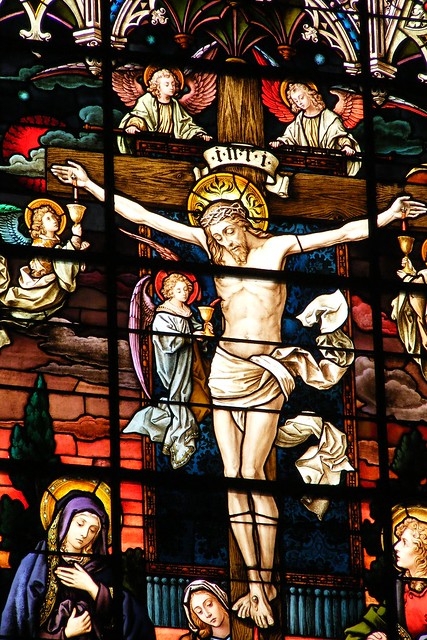
God not only came to man, he suffered and died the most gruesome death imaginable. If the miracle of God among us is not enough, the reality that he willingly submitted himself to death is almost unimaginable. His descent into hell is understood in many different ways. Scripture says he proclaimed the Gospel to those spirits who perished in the days of Noah (1 Pet. 3.18-20). Scripture also attests to the reality of his death. To say he descended into hell is equal in ancient times of saying that he descended to the place of the dead meaning he was truly dead. Many people today will want to say that he in fact was not completely dead which makes his resurrection not a miracle but just a natural occurrence. We can say this for sure: Christ died a death we deserved and endured the agony of God's wrath against sin. His descent into hell was both a marker for his real death and a something that points to the spiritual work done as part of God's plan of redemption.

"The third day He rose again from the dead; He ascended into heaven, and sits on the right hand of God the Father Almighty..."
The miracle of our faith is that our Savior is risen! This is what we proclaim with worship every Sunday and specifically during the Easter season. As he ascended, the promise was made that he would return one day and this is the cry of his people: Christ return! Scripture proclaims that he dwells now in heaven, continually interceding on our behalf to the Father. He his our advocate (1 John 2.1). This is our Lord and Savior! The church proclaims his resurrection through worship, prayer and fasting. During the Easter season, many traditions practice Lent which is a period of fasting in tandem with a season of spiritual growth and renewal in light of Christ's resurrection and reality of salvation in the life of believers. What a great God we have! He willingly laid aside his divine status and submitted to the shame of the cross (Phil. 2.7-8). Praise be to God! He bore the wrath for our sin and rose again as a proclamation to the power of God. He ascended and now intercedes on our behalf. May all glory and honor be given to him who has taken away the sin of the world. This is our God and may we worship him until our faith is made sight and we will dwell with him for ever and ever. May the God of all grace bless you this week with the encouragement found in the Creed and the power of the Gospel of Jesus Christ.

- Coleman

Monday, November 1, 2010

Parent Month Recap

Throughout the month of October, we invited parents to join us on Wednesday nights for a special month of discussion revolving around the topic, "Christ and Culture." How do we interact with culture without denying our responsibilities to the faith? Can Christians make an impact on culture, or should we seek to avoid culture altogether? Where do we draw the line on media, materialism and other mainstays in today's society?

We started the month with a look at today's media and how we should seek to interact with it as Christians. Social media (Facebook, Twitter, YouTube, etc.) is pervasive in today's culture and we have a responsibility to know how we should use, and not use, this platform of interaction. Should we use social media to connect with people, news and events? Absolutely, but where do we draw the line? As discussed, we need to be aware of our responsibilites to interact with people on a personal level and not stayed glued to our computers and cell phones. As believers, we are committed to relationships which means that our use of social media and media in general should serve that purpose. There is also an aspect of santification involved with our media choices. Do the things we watch and do through media detract from our pursuit of righteousness as a Christ-follower? Is it building us up or creating in us stumbling points? This is often a person to person situation, but we are called to constantly evaluate our own position and see if we are conforming to God's will or our own (Romans 12.1-2).

Our second discussion centered on materialism. We live in a culture that generally believes that all we have is the "stuff" of this world. We might as well grab all we can and enjoy it as long as we live! This is the lie of materialism. How do we as Christians respond? Are there aspects of our own life which have given into this mentality? Do we see this in the church today? We must understand how much of our culture is geared towards this kind of thinking and seek to present a biblical picture of life and material goods. Christ said to seek first the kingdom of God (Matt. 6.33). This means to seek after the building up of our spiritual life and the life of Christ-likeness, showing others what his kingdom looks like. We are to put these things in front anything else. Any job promotion, new car, new household goods or anything else that is good is to be secondary to the pursuit of God and his kingdom. Do we show this in the daily workings of our life, or do we blend in with the culture in this fashion?

We wrapped up our discussion portion of the month with some thoughts on loving the culture. Certainly we are called to love the world, and how does the view of Christ-like love compare to the picture of love in culture? Culture and media portray love as a mystical force that in uncontrollable and romantic, free of reason or responsibility. We as Christians are called to love people unconditionally as Christ loved us and boldly proclaim the Gospel, that is, that Christ was crucified for our sins and has brought reconciliation to man and God. Our love does not have limits, unlike our cultural picture of love which says, "What have you done for me lately?" We love because God first loved us (1 John 4.19).

We finished our month with a potluck and pumpkin bowling. What a great time of sharing and fellowship! I do hope that all of those who were able to make it out to our Parent Month enjoyed their time with us. It was encouraging for me to see the interaction during our small group time between parents and students. I want to encourage all our families to continue the pursuit of faith in your homes. This week I will send out some discussion questions for your family to ask in the homes regarding our topic of "Christ and Culture." I hope this will be a good bridge into the holiday season as we seek to magnify Christ in a culture that does anything but that. Take care families and have a great week in the Lord!

- Coleman

Saturday, October 23, 2010

Parent Month Potluck

Darn tootin' we're having a potluck this coming Wednesday. Do you know which flavor of jello you will be bringing?
Published with Blogger-droid v1.6.3